The value of flexibility
The pitch for battery storage is straightforward: store power when it's cheap, sell it when it's expensive. But another upside of a well-managed battery often shows up in moments most people never see - sudden grid emergencies, where flexibility briefly becomes the most valuable thing on the market.
Here's what that looked like in practice, on a single day in eastern Denmark.


When the grid runs short
The electricity grid only works if supply and demand match perfectly. Too little power and the lights flicker. Too much, and the system can become unstable.
Most of the time, maintaining the balance between supply and demand is routine. But on September 4th, something went wrong on the grid in eastern Denmark - most likely an outage, where a power plant or cable unexpectedly went offline. Suddenly, the grid needed 1 extra GW of electricity, fast, to stay balanced.
How the grid fills a sudden gap
When this happens, the grid operator turns to the electricity market and essentially asks: "who can supply electricity right now?" Whoever can respond fastest gets called on - and gets paid accordingly. The tighter the emergency, the more the market is willing to pay for that ability to respond.
On a normal day, electricity trades in Denmark for somewhere around €100–150 per megawatt-hour (MWh). On September 4th, the price for emergency power spiked past €4,000 per MWh - more than 25 times the norm. That's the electricity market's version of surge pricing: a sign of just how urgently the grid needed help.
How a battery captured that value
One of the batteries Reel manages as Balance Responsible Party (BRP) had been charging during calmer, cheaper hours earlier that day. When the emergency hit, it was ready: it discharged its stored power into the grid exactly when it was needed most, and was paid the premium price for doing so.
The battery had spent the first 23 hours of the day slowly building up profit through normal trading. Then, in the space of roughly an hour, during the price spike, it nearly doubled its profit - in one go.
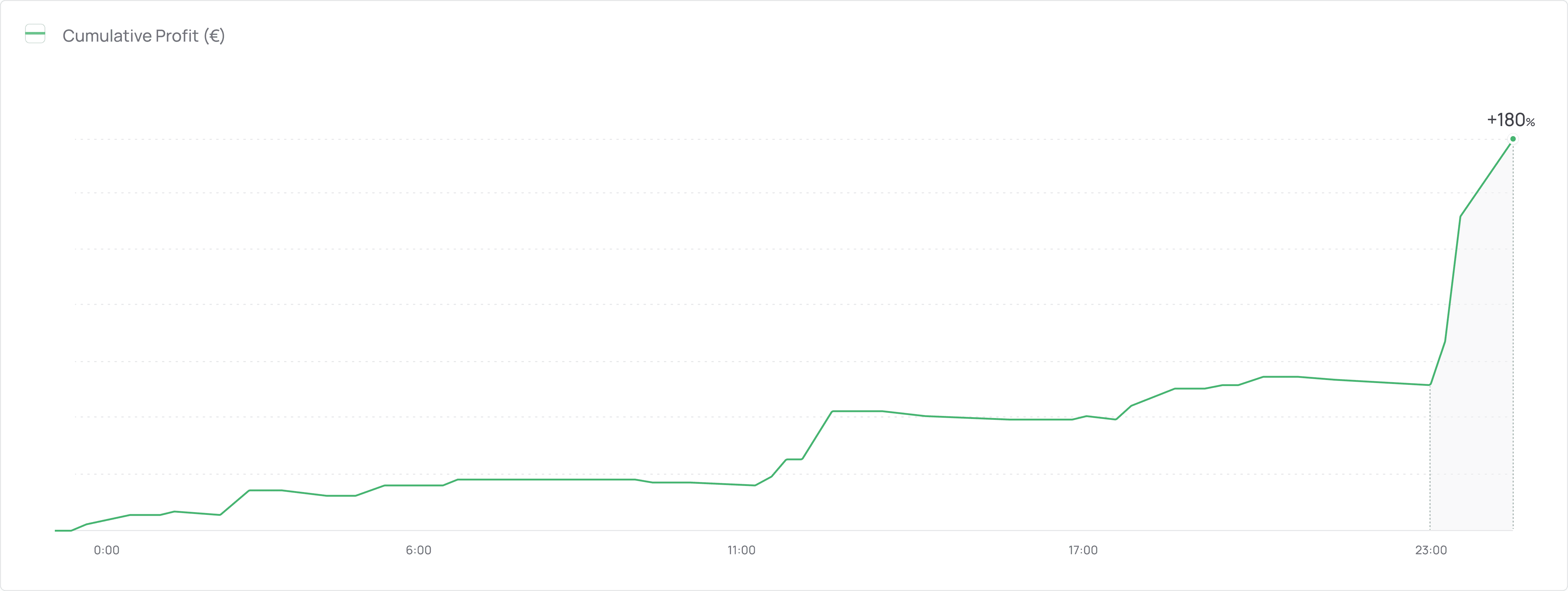
This is flexibility: the ability to ramp electricity use or supply up or down quickly in response to what the grid needs. Traditional power plants can take hours to start up or shut down. A battery can respond in milliseconds.
Why the BRP matters
What happened on September 4th is rare. But it illustrates what's structurally true about flexible assets: most of their value builds up gradually through everyday trading, while a small number of extreme events can meaningfully move the numbers - if the asset is positioned to catch them.
That positioning is what a specialized BRP is for: with an automated system like Reel's, assets are ready to catch these moments.